Research Projects
Development of an Autonomous Mobile Manipulator System to Perform Fetch and Carry Tasks
This research develops a mobile manipulator robot that exhibits autonomous and intelligent behavior to perform a fetch and carry task. The proposed system has three main sub-systems; i.e, manipulator system (Baxter), the mobile robot, and the Vision system. All these systems will be communicated through the Robot Operating System by connecting to a host computer. These tasks were achieved by a comprehensive study on robot kinematics, computer vision, object detection, navigation, localization, and path planning.
Optimal Design of a Cable Driven Locomotion Device
Chawalit Khanakornsuksan, Ph.D. student Assoc. Prof. Theeraphong Wongratanaphisan Description of Project: Parallel Kinematic Manipulators (PKM) have gained wide attention over past decades. Many researchers have developed PKMs to overcome some limitation of traditional serial robots. However, there are major drawbacks of PKMs such as small workspace, low dexterity and singularities. These are challenging problems that …
Continue reading “Optimal Design of a Cable Driven Locomotion Device”
Development of a Computer Program to Assist Upper Limb Rehabilitation Using Kinect Camera
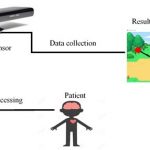
This project aims to concentrates on development of a computer program using virtual reality and natural user interface developed with Kinect Software Development Kit 1.8 (SDK). The program offers to collect shoulder and elbow angles measurement while playing virtual reality based rehabilitation exercise game. Exercise game is the blend of exercise and video game that gives new rehabilitation experience to the patients and to make the rehabilitation process more accessible and enjoyable to the patients and to assess their feasibility, usability and effectiveness.
Universal Control Designs for Time-Delay Uncertain Non-Linear Triangular Systems
This project aims to study a class of lower-triangular nonlinear systems which compose of both nonlinearly time-delay uncertainties and unknown control directions. The combination of Nussbuam technique (for handling the unknown control directions) and the dynamic gain-based design (for dealing with the effect of time-delay uncertainty) is applied to obtain the time-delay free state feedback control law that guarantees the boundedness of closed-loop trajectories and convergence of system states.
Modelling and control of a flexure-jointed servo-mechanism
This project has proposed a novel flexure model to design optimized X-Y stage compliance mechanism. The flexure modelling approach will be extended for use in dynamic models of the whole mechanism. As the dynamic model will be complex and have some uncertainty a robust control approach will be required.
Analysis and Design of Parallel Robot for Arm Rehabilitation
This project aims to develop a parallel robot suitable for arm rehabilitation tasks. The project was partially funded by Mid-Career Grant, Chiang Mai University.
Adaptive Compliance Control Without Joint Velocity Measurement of Gait Training Robot for Neurological Patients
This project aims to develop a gait training robot prototype for paraplegic patients. The focus is on controller design based on adaptive compliance control without joint velocity measurement. This project was funded by NECTEC.
Workspace Synthesis of an Asymmetric Delta Robot
Delta Robot is a popular parallel robot which has 3 degree-of-freedom. It is used widely for packaging industry. The advantages of the Delta robot are high strength, high agility, low inertia and high precision making it suitable for high-speed & high-precision applications. Typically, parallel robot has complicated kinematic. However, the kinematic of Delta robot is quite simple. Most Delta robots are symmetric in its structure i.e., each legs is installed on the base 120 degrees apart. For this the workspace of the robot is symmetric. However, in some applications, it may occur that the task space are not necessarily symmetric. This project focuses on synthesis of an asymmetric Delta robot.
ROBUST CONTROLLER DESIGN FOR CHATTER SUPPRESSION IN MACHINING USING INTEGRATED CUTTING AND FLEXIBLE STRUCTURE MODELS
Active control of structural vibration in machining processes to prevent dynamic instabilities and chatter is the main issue for this project. A controller design is proposed based on a multi-mode description of flexible structure dynamics combined with cutting process equations that capture time-delayed feedback effects. A method for robust delayed-state feedback control synthesis is presented based on Lyapunov-Krasovskii functionals (LKFs).
Active control of rotor systems to prevent instability arising from non-linear rotor-stator interactions
This work focuses on active vibration controller design to stabilize a rotating machinery undergoing contact between rotor and stator. The controllers are designed for an active magnetic bearing actuator and are based on Lyapunov stability criteria of the contact-free orbits.
Simultaneous Optimization of Structure and Control for Time-Optimal Motion of Vibratory Mechanical System
The objective of the project is to develop a new mathematical strategy based on the convexity of the reachable set in order to solve time-optimal control problem as applied to flexible mechanical systems. The proposed algorithm can guarantee the true optimality of the control solution since it solves directly for co-state variables which satisfy the necessary conditions rather than searching for switching time and later verify the optimality by using Pontryagin’s Minimum Principle.